The scholarship students' secret library is now online
Queen's College MS 611 — a Latin manuscript catalogue of the Taberdars' Library compiled around 1725 — is the earliest surviving list of Oxford scholarship students' book collection. Digitized by the Bodleian in April 2026, it lets scholars cross-reference a 300-year-old inventory against over 200 volumes that still sit on the same college's shelves today.
Somewhere at The Queen's College, Oxford, around 1725, someone sat down and made a list. Not of the main college library — that was somebody else's job. This list catalogued the books belonging to the Taberdars: the scholarship students, the college's most academically promising undergraduates, who had built their own separate collection over decades. The list runs to a single manuscript volume, written in Latin. No one recorded who compiled it.
That manuscript — shelfmark Queen's College MS 611, titled Catalogus Librorum in Bibliotheca Taberdarorum in Coll. Regin. Oxon ("Catalogue of Books in the Library of the Taberdars at The Queen's College, Oxford") — was digitized on April 22, 2026, and is now freely accessible on Digital Bodleian. 1 It arrived online as part of a batch of four Queen's College manuscripts added in a single day — together with a 12th-century Horace, a pair of diaries from a British prisoner in Napoleonic France, and a 17th-century travel account of Holland. 2 MS 611 is the quietest of the four. It is also the one that opens a window that no other source could.
Who were the Taberdars?
The name comes from the tabard, a distinctive academic gown worn by scholarship students at Queen's College. 3 The college itself dates to 1341, founded by Robert de Eglesfield, chaplain to Queen Philippa of England. From its earliest years it had a structured hierarchy of scholars supported by the foundation.
By the early modern period, the ladder worked roughly like this: Poor Boys entered first, receiving free commons in exchange for service duties. After completing a Bachelor of Arts, the most promising among them could be selected as Taberdars — funded scholars on the foundation, eligible to proceed to a Master of Arts and eventually to fellowship. 4 The Taberdars occupied a middle position: no longer the poorest students in the college, not yet fellows with a seat at the governing table.
That position — academically capable, institutionally junior, financially dependent on the college — shaped what kind of books they bought and kept. They were not wealthy collectors assembling prestige libraries. They were students building a working collection: the books they needed, plus the books they wanted. Over time, that working collection became a library distinct from the main college holdings, with its own catalogue.
What the catalogue records
MS 611 is the earliest surviving list of the Taberdars' Library. 5 William Poole, a historian at New College, Oxford, identified this manuscript directly in his 2018 article: "The earliest list we have for this library dates from around 1725 (Queen's College Library, MS 611)." 6
What makes the catalogue unusual is what happened to the books it listed. Over 200 printed books from the Taberdars' Library still survive in Queen's College's modern lending collection today. 6 That means scholars can cross-reference the 1725 catalogue against the surviving volumes, matching inventory entries to physical books. It is rare for both the list and the listed objects to have survived together — institutional libraries lose one or the other. Queen's College, by accident or by careful stewardship, kept both.
The collection almost certainly included theological works — Queen's College's original mission was training clergy for northern England, and that orientation shaped what students read for generations. Classical texts and early modern scholarly publications were almost certainly present too. The catalogue itself, written in Latin, signals an audience already at ease with humanist scholarly conventions. It is not a beginner's reading list.
A scholarship tradition that never entirely went away
The Taberdars did not disappear when Oxford's scholarship system reformed in the 19th century. They changed shape. In 1751, John Michel of Richmond, Surrey, established eight taberdarships in his will — fellowships of £50 a year for M.A.s — along with additional scholarships and exhibitions. 4 By 1926, Queen's College's new statutes had revived the term "Taberdarship" explicitly, this time as a well-paid research scholarship for Bachelor's graduates showing unusual academic promise. 4 Taberdarships are still awarded today, available for 2026 entry to Queen's undergraduates continuing to postgraduate study. 7
The Old Taberdars' Room still exists inside the college: a wood-panelled lounge furnished with sofas and chairs, used for informal discussions. 3 The institutional memory runs deep enough that a room kept the name for centuries after the system it described had transformed into something almost unrecognizable.
Why a library catalogue matters
Library catalogues do not usually get written up as cultural discoveries. They are administrative documents: someone counted the books, wrote down what they found, and filed the list. Most catalogues are read once, by whoever needed them, and then filed somewhere to gather dust.
MS 611 has outlasted the system that generated it by three centuries. In that time it became something its compiler almost certainly never intended: a record of what scholarship students at one of Oxford's older colleges were reading and collecting in the early 18th century — a period when the English university system was on the cusp of significant change. The catalogue does not comment on any of this. It simply lists the books.
The compiler's name is not recorded. The manuscript's physical dimensions and binding remain undescribed in the publicly available catalog record. What the record does establish is that the manuscript dates to around 1725, and that the books it catalogued still sit on shelves in the same college where they were collected.
Read the manuscript
The full digitization of MS 611 is freely accessible on Digital Bodleian with no registration required, alongside the three other Queen's College manuscripts digitized in the same April 2026 batch.
正在加载内容卡片…
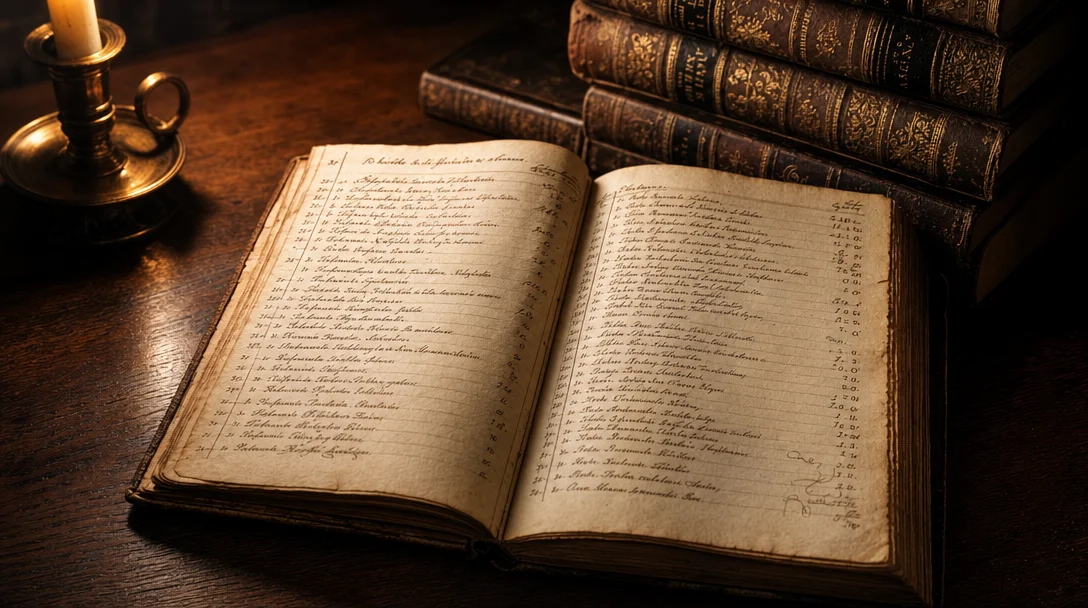
Cover image: AI-generated illustration of an early 18th-century manuscript catalogue on a library desk.
参考来源
- 1Queen's College MS 611 — Digital Bodleian
- 2@queenscollegelibraryox Instagram announcement, April 22, 2026
- 3The Queen's College, Oxford — Wikipedia
- 4Victoria County History: The Queen's College
- 5William Poole, "A royalist mathematical practitioner in interregnum Oxford," *The Seventeenth Century* (2018)
- 6William Poole, author manuscript, Oxford University Research Archive (2018)
- 7The Queen's College: Taberdarships
围绕这条内容继续补充观点或上下文。